
by Gerald McMillan
As a young man, all I dreamed about was owning a piece of land all my own. Now, not to be greedy, but while I was wishing, I wished that piece of land had a pond on it, too.
I never gave much thought to the house but I had the pond all mapped out in my head. It would have shallow spawning water with a gravel bottom, plenty of cover for the minnows and bait fish, deep water drop offs, and be well stocked with perch and bass. Many years later, I finally signed off on my farm, complete with a five acre pond. Working with a biologist, I stocked the pond and was on my way to building my very own fishery. I soon learned that this wasn’t going to be as easy as it sounds because everything that walks by, or flies over, my pond teated it like an all you can eat fish buffet.
A well-managed farm pond can be one of the most rewarding features on a piece of land, providing fishing, wildlife viewing, and even irrigation water. But nothing frustrates a pond owner faster than watching a carefully stocked fish population steadily disappear. Often, the culprit isn’t poor management or bad stocking decisions—it’s predation. A variety of animals have learned that a stocked pond is an easy buffet, and if left unchecked, they can dramatically reduce fish numbers in a short time.
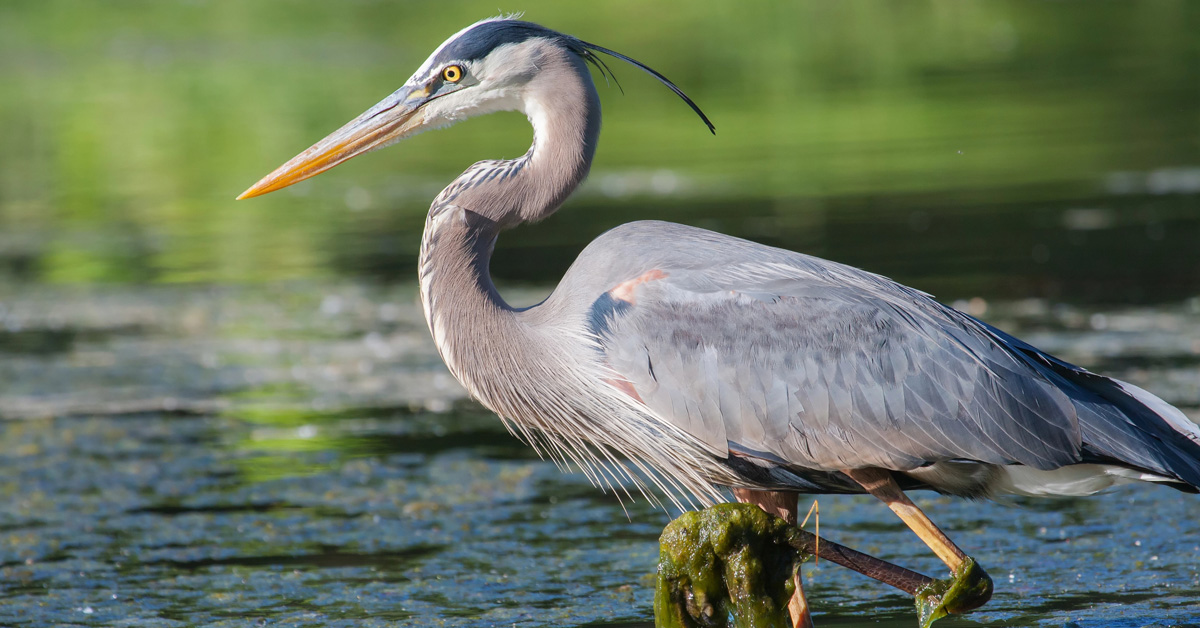
One of the most common offenders is the Great Blue Heron. Tall, patient, and highly effective, herons are built for shallow-water hunting. They wade quietly along the edges of ponds and spear fish with lightning-fast strikes. A single heron can consume multiple fish in a day, and because they often return to the same feeding spot, they can quickly thin out a population—especially of larger, visible fish like bass and bluegill.
Closely related and just as problematic are egrets. These smaller white birds often hunt in groups, making them even more damaging when they descend on a pond. While each bird eats less than a heron, their numbers can make up the difference.
Another major predator is the double-crested cormorant. Unlike herons, cormorants don’t just hunt the shallows—they dive and pursue fish underwater. This makes them especially dangerous because no part of the pond is safe. A flock of cormorants can devastate a pond in a matter of days, consuming pounds of fish daily.
On the mammal side, river otters are among the most destructive. While they’re fascinating and even entertaining to watch, otters are efficient predators that often kill more fish than they immediately consume. They can wipe out years of stocking effort in a surprisingly short time, especially in smaller ponds. Once otters discover a pond, they tend to return again and again.
Also worth noting are raccoons. While not as efficient as birds or otters in open water, raccoons are opportunistic feeders that prey on fish in shallow areas, particularly during spawning when fish are concentrated and vulnerable.
Then there are reptiles like the common snapping turtle. These ambush predators lie motionless on the pond bottom and grab passing fish. While a single turtle may not cause catastrophic damage, a population of large snapping turtles can certainly put a dent in your fish numbers over time.
Preventing or controlling these predators requires a mix of strategies. There is no one-size-fits-all solution, but a multi-layer approach works best.
For bird predators like herons, egrets, and cormorants, visual deterrents can be effective—at least temporarily. Decoys shaped like predators, reflective tape, or even simple scare devices can make birds uneasy. However, these animals are smart and quickly become accustomed to stationary deterrents. Moving them regularly or combining them with other methods increases effectiveness.
Another highly effective tactic is the use of overhead lines or grid systems. Stretching fishing line, wire, or cord across portions of the pond can prevent birds—especially cormorants—from landing. This is particularly useful for smaller ponds. It may not look pretty, but it can save a fish population.
Providing deeper water and structure within the pond also helps. Fish need places to hide. Brush piles, rock piles, and artificial structures give them refuge from both diving and wading predators. A pond with gradual, shallow edges is more vulnerable than one with steeper drop-offs that limit wading access.
When it comes to otters, prevention is much more difficult. Fencing can help, particularly electric fencing installed low to the ground around the pond perimeter. However, otters are determined and capable animals, so fencing must be properly installed and maintained. Once otters establish a pattern, trapping is often the most effective solution. In many areas, this requires permits or must be done during legal trapping seasons, so it’s important to check local regulations.
Raccoons can be managed with similar methods. Removing brush and growth around the pond reduces their access points and hiding spots. Live trapping is often effective, again depending on local wildlife laws.
Snapping turtles can be controlled through trapping as well. Specialized turtle traps baited with fish or meat can remove problem individuals. Some pond owners also fish for them directly using stout tackle, though caution is advised—these animals are powerful and can inflict serious bites.
It’s also worth considering stocking strategies. Overstocking forage species like bluegill can help offset losses to predators. In some cases, adding faster-growing or less vulnerable species may reduce the overall impact of predation.
Ultimately, the key to protecting a farm pond is vigilance. Regularly observing the pond, especially early in the morning or late in the evening, can reveal which predators are visiting. Tracks along the bank, feathers, or fish remains can also provide clues. The sooner a problem is identified, the easier it is to address.
A farm pond will always attract wildlife, and in many cases, that’s part of its charm. But when predators begin to tip the balance, thoughtful management can restore it. With a combination of deterrents, habitat improvements, and, when necessary, removal, pond owners can protect their investment and keep their fish populations thriving for years to come.