

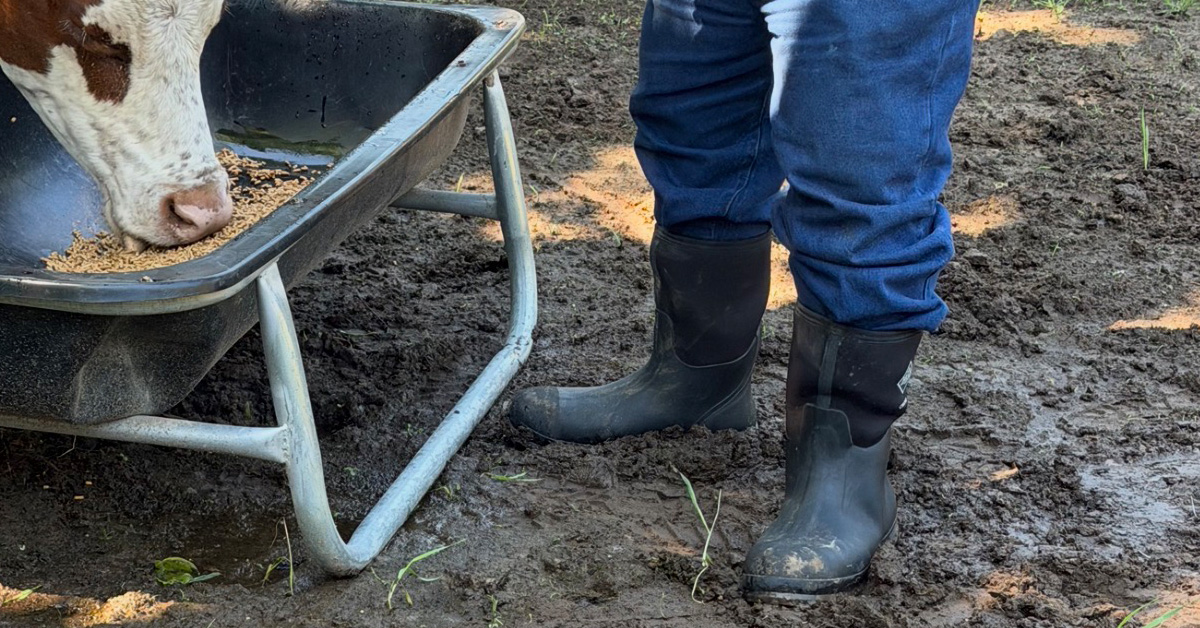
by Kelly Reeves
I stepped out of the UTV and into the water. It was only seconds until I felt the icy cold water seeping in through the cracks in my rubber boots, quickly soaking my socks. A few steps later and I was standing in twelve inches of water in my ten inch boots. My feet were soaked and numb long before I finished the fence repair.
You know what they say about a man with big feet? He wears big boots! Now, I like big boots and I cannot lie. The problem is they are hard to find. Even with internet shopping, try to find a pair of size 16 EEEE rubber boots. You just can’t do it. They aren’t out there. So, I’ve been curling up my toes and squeezing into a pair of size 15, white, short-top shrimper boots for the last ten or more years. Cajun Reeboks they call them.
There’s a certain moment every outdoorsman knows; the one where you step out into a muddy pasture, a flooded timber flat, or a dew-soaked trail at daylight and wonder if today’s the day your boots finally give up. Cold water sneaks in, your socks get soaked, and the rest of the day turns into a miserable slog. That moment is exactly why I finally broke down and got in touch with the Muck Boot Company. After a few emails back and forth, the team at Muck jumped through a few hoops and made it happen for me. Though not many of their customers need a size 16 boot, they realize that rubber boots are not a one-size fits all product. The team was able to come up with a pair they thought just might work at a price that I thought was more than competitive. I ordered the Muck boots which arrived at the office three days later. The fit was perfect and after putting them through their paces, I can say without a doubt, I should’ve done it sooner.
From the first time I pulled them on, these boots felt different. Not stiff, not clunky, not like I was strapping on a pair of buckets. They slid on easy and fit snug without feeling tight, thanks to that flexible neoprene upper that moves with you instead of fighting you every step. That may not sound like much until you’ve spent a long morning fixing fence, hauling feed, or slogging through gumbo mud that grows bigger with each step.
Out here, dry feet aren’t a luxury, they’re a necessity. Whether I’m working cattle, checking water troughs, or easing through the woods before sunrise, there’s always moisture involved. Wet grass, standing water, creek crossings, or just plain East Texas mud. The first real test for my Muck boots came on a morning when the pasture looked more like a rice field than a grazing lot. Step after step, I expected that familiar cold seep. It never came.
That’s where these boots really shine. The waterproofing isn’t just a feature, it’s the whole design. Unlike some cheaper rubber boots that rely on seams or glued sections that eventually fail, Muck boots are built with a seamless rubber shell and a neoprene upper that seals tight. There’s no weak point for water to sneak in. You can stand in water, walk through it, work in it, and your feet stay dry, plain and simple.
Comfort is another thing that sets them apart. A lot of rubber boots get the job done for about an hour, then start reminding you of every step you’ve taken. Not these. The cushioning and support hold up through a full day’s work. Whether I’m climbing in and out of a truck, walking fence lines, or covering ground in the woods, I don’t find myself thinking about my feet, and that’s about the highest compliment you can give a pair of rubber boots.
Then there’s warmth. On cold mornings, especially during hunting season, these boots earn their keep. The neoprene insulation does a fine job of holding in heat without turning your feet into a sweaty mess once the day warms up. That balance is hard to find, but it’s something Muck seems to have figured out. You stay warm when it’s cold and comfortable when it’s not.
When it comes to stacking them up against the competition, the differences become even clearer. Plenty of brands make rubber boots, but not all rubber boots are created equal. Lower-end options tend to crack, especially if they’re left in the sun or flexed hard during daily chores. Others lose their waterproof integrity after a season or two, right when you’ve come to depend on them most. Most important, every other rubber boot I’ve ever owned came with an unlimited number of blisters at no extra charge. My Muck boots have yet to leave a blister!
Muck boots, on the other hand, are built for the long haul. The materials hold up under real-world use, mud, manure, brush, and everything in between. The outsoles provide solid traction, which matters more than you think when you’re navigating slick creek banks or wet grass. I’ve had boots before that turned every step into a gamble once things got muddy. These don’t.
Another advantage is the fit and flexibility. Many competing boots feel bulky and awkward, almost like you’re walking in casts. Muck boots move more like a good pair of work boots, which makes a big difference when you’re covering ground or working on uneven ground. Less fatigue, better balance, and a whole lot less frustration.
When you’re out hunting or working far from the truck, gear failure is more than just inconvenient. Knowing your boots are going to keep you dry and comfortable no matter what you step into gives you one less thing to worry about. That peace of mind is worth more than the price tag.
Since I’ve started wearing them, these boots have been everywhere with me. Early morning hunts, muddy feeding routines, rainy-day repairs, and everything in between. They’ve been caked in mud, rinsed off, and put right back to work without missing a beat. They’ve become one of those pieces of gear you don’t think about much anymore, and that’s exactly the point. They just do their job.
A good pair of boots isn’t about looks or brand names. It’s about performance when it counts. It’s about stepping into a mess and knowing you’ll come out the other side dry and comfortable. It’s about long days, tough conditions, and gear that doesn’t let you down.
For me, that’s exactly what I found in my Muck boots.