
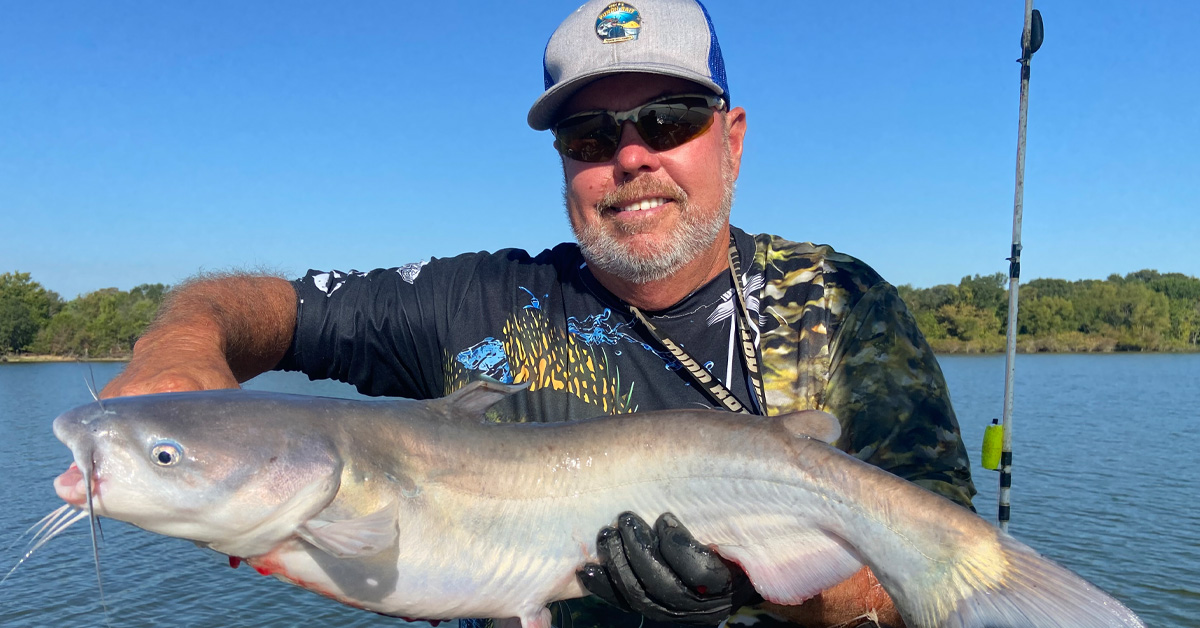
by Luke Clayton catfishradio.org
There is something very special about a wood cook fire or propane burner heating a cast iron skillet filled with freshly caught catfish fillets. It’s the stuff great summer memories and meals are made of. I grew up on a poultry farm in very rural northeast Texas, and every nine weeks, after the chickens went to market, my dad would declare a holiday, and the entire family would pack the old International pickup with camping and fishing gear, and we were off for a few days of camping, catfishing, and outdoor cooking! No fancy RVs back in those days, Dad was pretty handy with wood, and he had built a swing-out cooking table that attached to the side of the truck. In a matter of thirty minutes upon arrival, our campsite was complete with a big tarp (called a wagon sheet back in the old days) staked out for protection from rain and shelter for sleeping unless, of course it rained. I can still remember us packed in the tight cab of that old truck a few times, waiting for a summer storm to pass. In retrospect, I doubt if many folks today would opt for such a Spartan summer outing, but back in the late fifties, when I was a little boy, the experience was sheer delight! Much has changed since my early days catching catfish on rod-and-reel and trotlines with my family. I’ve learned a lot of different techniques during my forty-year career as an outdoor writer from pro catfish guides over much of the country. Let me share a few tips with you that will hopefully help you put plenty of whiskerfish on your stringer and ultimately in some hot grease!
Techniques for catching the three primary catfish species in Texas vary somewhat. Granted, all three species can sometimes be caught on baits as basic as a nightcrawler or a piece of hot dog, but don’t expect to load the boat with big flatheads or blue catfish on such minuscule offerings. One thing all catfish have in common is their ability to detect scent for a great distance; catfish are often described as ‘swimming noses’. My fishery biologist buddies tell me catfish can detect blood at concentrations of one part in ten billion parts of water. That’s the primary reason baits such as freshly caught shad or skipjack herring, cut open to allow the scent to disperse in the water, are so effective in attracting catfish. Catfish anglers are well known for making their own ‘secret’ concoctions, and most of them have ingredients that their targeted species can smell.
As mentioned, I’ve fished with many of the very best ‘catters’ through the years, guys that make their living catching catfish. Let’s take an in-depth look at the different species and some of the best ways to catch them.
CHANNEL CATFISH Probably the most widely dispersed and most often fished for is the channel catfish. From the trophy catfish waters of the upper Red River in North Dakota to the countless lakes teeming with ‘eater size’ fish, the channel catfish is probably the most fished for and, in many instances, the easiest to catch, especially during the summer months.
Through the years, I’ve caught them on everything from salted, dried beef blood to pieces of soap to wild hog liver. Channel cats are definitely not picky during the summer months when their metabolism is in high gear. I’ve had my best success by baiting holes with everything from corn right out of the feed sack to soured grain. If you are looking for fast action, consider souring a sack of grain for a few days in the sun and baiting a few spots, especially on the sides of bends in creeks or rivers in my favorite catfish lake. A can, or two of beer in the mix, or soured milk helps break down the grain and helps it sour faster. After baiting three or four spots, begin fishing the first one you baited. During the summer, it’s often the only spot you need to fish, but sometimes, because of the thermocline and varying oxygen levels in the water, it’s helpful to chum spots at different depths. If you live close enough to the lake and fish often enough, a hole that is kept freshened with sour grain will attract and hold catfish throughout the year. Fishing can be good in the dead of winter around these spots, but expect the bite to be a bit softer. There are countless catfish baits on the market today, and I’ve tried most of them. Most of them will catch fish, but I’ve found some to work better than others. Years ago, I worked with a major catfish bait manufacturer and helped develop a new bait designed for catching channel catfish. My task was to work with several top catfish guides and give weekly updates of their results, fishing with different blends of bait. We began testing Blend A, and by the time we got to Blend G, the chemist at the company and all the guides gave the new bait a thumbs-up. During this testing phase, the one thing I kept hearing from the guides is “Add more scent”. I never knew the exact formula used for the bait, but I do know when you open the container, there is a distinct smell that I’m sure a hungry catfish can sniff out from quite a distance! It’s still on the market, and I believe it to be one of the best commercially produced baits around, but as stated, catfish can be landed on a wide variety of baits, and most experienced catfish anglers have their favorite.
The bait isle of a big package store will have a wide variety of catfish baits in stock, everything from very pungent-smelling punch baits that get their name by the way they are applied to the treble hook. Hooks are punched into a bucket of bait with a notched screwdriver or small stick and pulled back through the bait to load the hook. Some baits have almost no smell, and I’ve used some that do catch fish. I think it’s best for the beginner catfish angler to do a bit of experimenting to determine his or her favorite bait. Keep in mind that bloody beef or pork liver will always produce action, as will chicken liver, but it is hard to keep on the hook; one bite and chicken liver is gone. Hook styles for channel catfish depend upon the bait used. For punch bait and usually liver, a #4 or #6 treble hook is best. When fishing with cut bait, “J” style hooks usually work best.
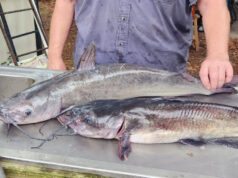
BLUE CATFISH A few decades ago, blue catfish were primarily found in rivers and large streams, but back in the eighties, state fish and wildlife departments began stocking blues in lakes and reservoirs, and today, many lakes in East Texas have very healthy blue catfish populations. Lake Livingston is a world-class blue cat fishery, as is Lake Tawakoni, and of course Lake Texoma up on the Texas/Oklahoma border. Today, most of these lakes are chock full of eater-size blues that range from 2 to 10 pounds, but Tawakoni, Cedar Creek, and Ray Hubbard are known for producing trophy-size catfish, especially during late fall through early spring. This is when the trophy catfish anglers take to the water in quest of the big ones. At these lakes during the peak of trophy season, say November through February, it’s not uncommon to catch fish weighing between twenty-five and forty pounds, and fish in the fifty-to-sixty-pound range are caught by savvy anglers with the proper tackle. No telling how many fish are lost by anglers using light rods and reels not designed for landing really big, hard-pulling fish. It takes a rod with some backbone and a high-capacity reel spooled with strong line to bring a big blue to the net. If you’re targeting big blues, nothing beats freshly caught shad or cut sunfish. But pieces of rough fish, such as carp or drum, can also be effective. Most pros prefer the Santee Cooper catfish rig, which consists of a circle hook on a 24 to 36-inch or longer leader. A small float is placed six inches or so above the hook, which keeps the bait suspended up from bottom, making it much easier for a passing catfish to grab. A barrel weight is placed just above the swivel the leader is tied to.
FLATHEAD CATFISH It seems blue catfish have become the go-to big catfish for anglers wanting to really get their line stretched, mostly because of their abundance and ease to catch, but there are still plenty of flatheads in our east Texas lakes. Don’t expect to go out and catch a limit of big flatheads on every outing, but anglers using live perch with plenty of patience still bring in some lunker flatheads. Flatheads love heavy cover, and heavy tackle is needed to hoist them out of heavy brush or submerged timber. There are still a lot of trotline anglers who like to set lines along creek or river channels and bait with 2 to 6-inch live sunfish. If you want action, flathead fishing probably is not your forte, but it’s hard to beat the flavor of fried flathead catfish. Many catfish eaters prefer the snow-white meat from flatheads to all other catfish. As for me, I absolutely love eating all three of the species we have here in East Texas waters. Here’s hoping these tips will help you on your next adventure targeting the fish with whiskers! LC