
by Terry Robertson
Along riverbanks, lakes, and farm ponds, in bait shops and marinas, and in the quiet corners of old tackle boxes, there lives a fishing trick that’s been passed from one generation to the next with a wink and a whisper. My grandpa called it an O.I.T., of course he called many things an O.I.T. (old Indian trick). It’s known as “blowing” worms. The name sounds odd to modern ears, and the method might raise an eyebrow or two, but for decades this simple practice helped fishermen catch fish when nothing else seemed to work.
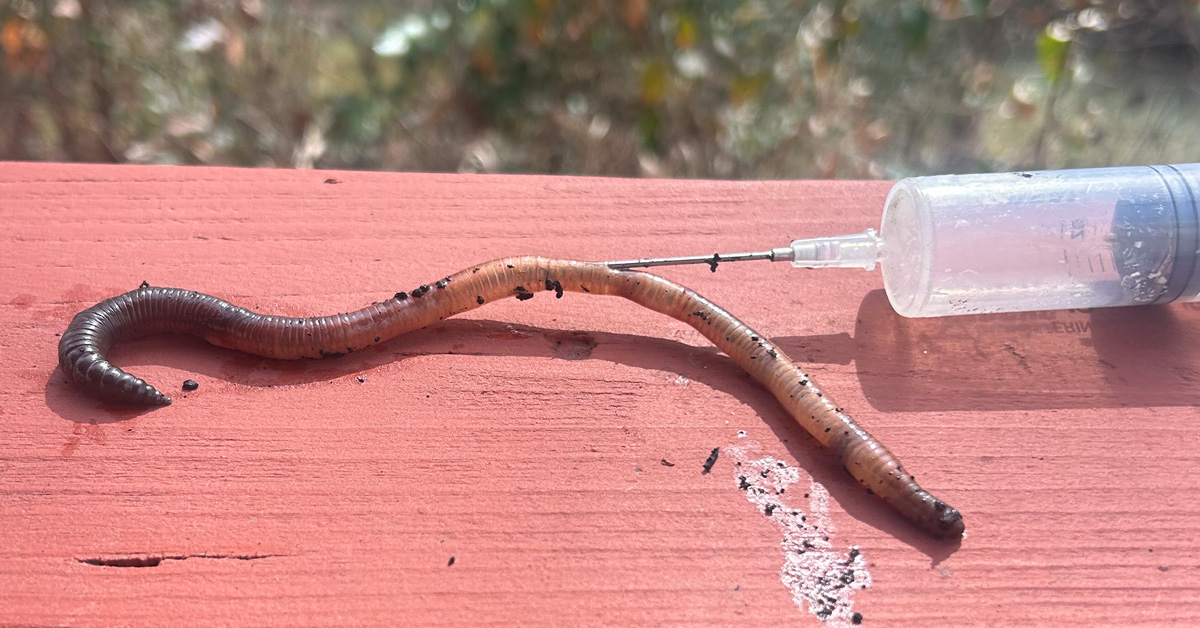
Blowing worms is exactly what it sounds like: injecting a little air into a night crawler or other worm so it floats. That little bit of buoyancy can make all the difference in the world when fish are finicky, water is murky, or bait needs just a bit more life to stand out. Long before fancy floating baits, scented plastics, and high-dollar rigs filled store shelves, fishermen relied on what they could carry in a pocket or make themselves. A worm, a hook, and a bit of know-how were all they needed.
Old-timers will tell you that worms are as close to a universal bait as you’ll ever find. Bass, bluegill, catfish, trout, crappie—just about everything that swims will eat a worm at one time or another. The trouble is that worms tend to sink, curl up on the bottom, or disappear into weeds and muck where fish can’t easily see them. Blowing a worm solves that problem by lifting it just off the bottom, letting it hover, wiggle, and wave in a way that fish find hard to ignore.
The trick itself came from observation. Fishermen noticed that fish often struck bait that moved naturally in the water rather than lying still. They also noticed that worms with trapped air sometimes floated briefly before sinking again, and that fish seemed quick to grab them during that short window. From there, it didn’t take much imagination to realize that adding air on purpose might keep the worm up longer and make it look more alive.
In the early days, blowing worms was done in a few different ways. According to my grandpa, Indians used a hollow piece of grass or a straw, gently inserting it into the worm and blowing a bit of air inside with their mouth. Is this really true? Grandpa said it, so I believe it. Later, others used small hypodermic-style syringes, often borrowed from farm use, to inject air in the worms. Over time, bait needles designed specifically for the job became common, but the idea stayed the same. You weren’t trying to blow the worm up like a balloon. Just a little air would do.
The goal was to make the worm neutrally buoyant or just barely floating. When done right, the worm wouldn’t rocket to the surface. Instead, it would slowly rise or hover above the bottom, moving with the slightest current. That gentle motion is what made the trick so effective. To a fish, it looked like an easy meal drifting along, not something buried in the mud or tangled in weeds.
There’s also a visual aspect to a blown worm that shouldn’t be overlooked. A worm filled with a bit of air looks plumper and longer. Its segments spread out slightly, and it tends to straighten rather than curl. In stained or dark water, that larger profile helps fish see the bait from farther away. In clear water, the natural movement seals the deal. Fish don’t have to think about it for long. They just react.
This technique really shines in situations where fish are feeding near the bottom but not actively chasing bait. Think of slow summer days when bass are hugging structure, or cold spring mornings when fish are sluggish. A floating worm placed just above a rock pile, log, or weed edge sits right in the strike zone without needing constant movement from the angler. It’s fishing at its simplest, letting the bait do the work.
Blowing worms was especially popular among catfishermen and panfish anglers. Catfish often cruise just off the bottom, using their senses to locate food. A worm hovering a few inches up gives off scent and movement that draws them in. Bluegill and other panfish, notorious for pecking at bait, tend to grab a floating worm more confidently than one lying flat. The result is fewer missed bites and more fish hooked cleanly.
There’s also something to be said for how blowing worms helped fishermen deal with tough bottom conditions. Muddy ponds, silty lakes, and rivers with soft bottoms can swallow a worm in seconds.
Once it’s buried, it might as well not be there. By adding air, the worm stays visible and accessible. Even when it does settle, it takes longer to disappear, giving fish more time to find it.
As with many old fishing tricks, blowing worms fell out of favor as new products hit the market. Floating jig heads, foam inserts, artificial worms that float straight out of the package—all of these made it easier to achieve the same effect without extra steps. Convenience won out, and many younger anglers never learned the old method at all. But that doesn’t mean it stopped working.
In fact, some fishermen believe the blown worm still has an edge. Artificial baits may float, but they don’t smell or taste like the real thing. A live worm, even one filled with air, still gives off natural scent and movement that no factory-made lure can fully copy. When fish are pressured or picky, that authenticity can make all the difference.
There’s also a certain satisfaction in using a technique that connects you to the past. Blowing worms isn’t about gadgets or brand names. It’s about understanding how fish behave and using simple tools to your advantage. It’s the kind of trick you learn sitting on an overturned bucket, listening to an older fisherman tell stories while threading hooks and sipping on a Pabst Blue Ribbon.
Of course, like any fishing method, it takes a bit of practice. Blow too much air into a worm and it becomes fragile, tearing easily or floating unnaturally. Blow too little and it won’t lift enough to matter. Most experienced anglers aim for a balance, adding air in small amounts and adjusting based on water depth, current, and the species they’re targeting. It’s a hands-on process, learned more by feel than by instructions.
There’s also an unspoken understanding about respect for the bait. Old-timers often treated worms with care, keeping them cool and moist, handling them gently, and using only what they needed. Blowing worms wasn’t about waste; it was about making the most of what you had. In an age when fishing was as much about putting food on the table as it was about sport, that mattered.
Today, the trick still has its place. Whether you’re fishing a quiet farm pond, a backwater slough, or a slow-moving river, a blown worm can give you an edge when fish aren’t cooperating. It’s especially useful for anglers who enjoy simple rigs and natural bait, and for those who appreciate the small details that separate a slow day from a good one.
More than anything, blowing worms reminds us that fishing has always been a blend of patience, observation, and creativity. Long before sonar screens and carbon fiber rods, fishermen watched the water, paid attention to what worked, and shared their discoveries with others. Some of those discoveries, like this one, are still worth remembering.
So the next time you find yourself staring at still water, wondering how to tempt a reluctant fish, consider reaching back into the bag of old Indian tricks. A worm, a hook, and a little air might be all it takes. In that simple act, you’re not just fishing—you’re carrying on a tradition that’s floated along quietly for generations, just like a well-blown worm hovering above the bottom, waiting for a fish to notice.