
by David Wilson
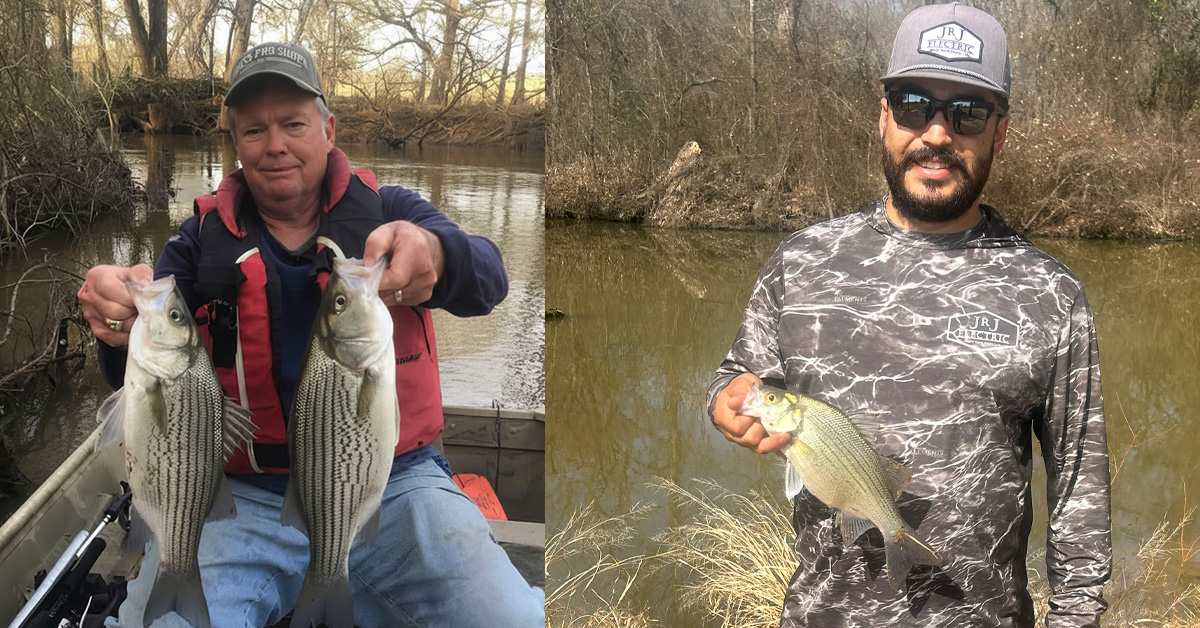
Every spring I look forward to one of the most exciting freshwater fishing events of the year: the sand bass run. In my part of Texas, sand bass is the local name for the white bass (Morone chrysops), a schooling fish that makes an annual migration from deep lake waters up into rivers and creeks to spawn. This migration creates some of the most fun and frantic fishing action of the year as these fish stack up in moving water, feed aggressively, and give fishermen opportunities for fast action, big numbers, and memorable days on the water.
The spring sand bass run usually begins in late February and continues through April, with peak action often occurring when water temperatures climb into the mid-50s to mid-60s Fahrenheit. This temperature range — roughly 55–65°F — triggers the fish’s instinct to move upstream and begin spawning activities. A warm rain or a period of warming weather can accelerate the run, while cold snaps can slow it down.
Across the state there are many excellent places to chase the sand bass run. In East Texas, rivers that drain into lakes like the Sabine above Toledo Bend and the Neches above Lake Palestine are traditional hotspots where white bass stack up below river access points, bridges, and riffles. In North and Central Texas, the Colorado River watershed, including areas around Inks Lake and Lake Buchanan, produces prolific spring runs as fish push upriver. Lakes such as Lake LBJ, Cedar Creek Lake, Lake Bridgeport, and Possum Kingdom Lake also host heavy sand bass migrations in their feeder creeks and river arms, where congregating fish can be found in abundance.
During the run, water clarity and flow can vary widely depending on recent rains and lake releases, but fish often stack in similar types of water. Look for moving water in creek channels, river bends, and mouths of tributaries where current breaks into shallow flats. Fish staging in deeper holes just below creeks or in slight current can also produce great action before they push farther upstream.
The best baits and techniques take advantage of the sand bass’s aggressive feeding and schooling behavior. Small chrome, silver, or white metal slabs retrieved with a steady retrieve are classic choices because they mimic baitfish and flash in the current. Jigs tipped with live minnows or soft plastics in white, small crankbaits, and spinnerbaits are also highly effective when sand bass are actively feeding. Live bait such as shad fished under a float can be an excellent option when fish are concentrated and reacting to natural forage. Many people find that working these presentations in and around current breaks, eddies, and deeper slack water near riffles produces consistent action throughout the run.
Timing your approach throughout a day can pay dividends too. Early morning and evening hours often bring the most surface activity, especially if water temperatures are still climbing, while mid-day can see fish holding deeper or near cover as the sun warms the water. Adjusting retrieve speed and bait profile to match water temperature and fish activity will improve chances of success. Water in the 50s and low 60s usually finds fish in transitional zones between deep and shallow water, while as temperatures warm toward the mid-60s, fish often become more aggressive and willing to chase faster presentations.
No spring fishing article would be complete without a reminder of applicable Texas fishing laws that help sustain our fisheries for everyone. Sand bass (white bass) are subject to statewide freshwater bag limits set by the Texas Parks and Wildlife Department (TPWD): anglers may keep up to 25 white bass per day, and in most public waters there is a minimum length limit of 10 inches on fish taken. Fish retained must be counted against your bag limit once they are in your possession — for example in a livewell, cooler, or stringer — and exceeding these limits is unlawful. These limits apply across most of Texas’ freshwater bodies, though some specific lakes or rivers may have different regulations, so always check the current TPWD Outdoor Annual before fishing.
With the spring run offering some of the most fast and furious action of the year, visiting sand bass fisheries in Texas during late winter and early spring will reward you with schooling fish, explosive strikes, and great numbers. It’s also a great time to introduce new people or kids to the sport of fishing. Paying attention to water temperatures, learning the migration routes and current breaks, mastering a few key baits, and abiding by state fishing regulations will set you up for a successful and conservation-minded sand bass season.