
A FENCE SHOULD BE HORSE HIGH, BULL STRONG, AND PIG TIGHT.
by Harold Adams
I remember the day I saw my first Texas Fence Fixer about as clearly as I remember the first good horse I ever owned, and the first kiss from my 8th grade girlfriend. It wasn’t flashy. It didn’t come with a fancy brochure or a sales pitch. It was just laying there in the back of a rusty pickup at the feed store where I worked as a teenager. It was plainly and boldly stamped Made In Seguin,Texas, and that alone was enough to make me take a second look.
If you’ve ever run cattle, you know fences aren’t a “set it and forget it” kind of thing. Fences are alive. They sag, they stretch, they break at the worst possible time—usually right before a storm, during calving season, or when you’re already behind on a dozen other jobs. I’ve spent more hours than I care to admit fighting barbed wire with pliers that slipped, stretchers that pinched fingers, and makeshift contraptions that worked just well enough to get you through the day.
Before the Texas Fence Fixer, fixing a loose fence meant planning your whole afternoon around it. You’d gather tools, wrestle wire, cuss under your breath, and still end up with a repair that looked like an octopus under the influence tied it together. It held, for the most part, but it never felt right again.
I later worked weekends for that rancher. The first fence I fixed with that tool was an old stretch along the back pasture where the wire had been stretched by a curious bull who thought the girls were prettier on the other side. I was already hot, tired, sunburned, and not in the mood for nonsense. I reached for the Texas Fence Fixer more out of hope than confidence.
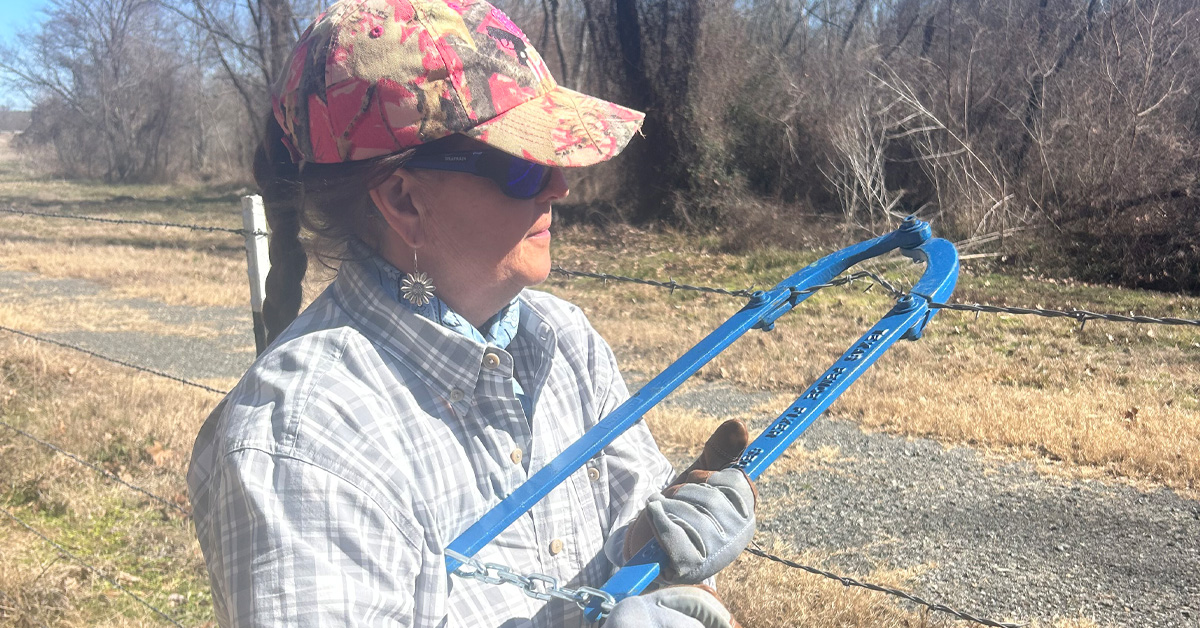
Right away, I noticed how solid it felt. No flimsy metal. No loose parts. It had weight, balance, and the kind of American craftsmanship you can feel before you ever use it. Somebody, somewhere in Texas, had built this thing with calloused hands and an understanding of what real fence work looks like. It’s a simple, articulated hand tool that works based on leverage.
I hooked it onto the wire, gave it a pull, and a couple-three twists. I was ready for the usual struggle. It never came. The wire tightened smooth and steady, no slipping, no sudden release that sends your knuckles flying into a barbed surprise. In a matter of moments, that fence line was snug again. Not “good enough.” Right. The way it should be. I tightened 5 wires in under 5 minutes.
I stood there for a second, leaning on a fence post, just staring at it. It dawned on me that I’d fixed a fence in minutes instead of an hour, and I wasn’t bleeding.
That’s when I realized the Texas Fence Fixer wasn’t just a tool—it was a time saver. And time, out here, is about the most valuable thing a rancher’s got.
Over the weeks that followed, I used it every single day that I worked. Strands stretched by cattle pushing on it, deer jumping and hitting the top wire, falling limbs from nearby trees, a multitude of quick repairs before cattle got out. One lived behind the truck seat, then graduated to a permanent spot in the toolbox. Another was a permanent fixture on the UTV. I found myself volunteering to fix fence instead of putting it off. When a neighbor mentioned a saggy fence line, I’d grab the Fence Fixer and be back before the coffee got cold.
There’s something deeply satisfying about a simple tool that does exactly what it’s supposed to do. No batteries. No gimmicks. Just good American steel, smart design, and honest workmanship. You could tell it was made by folks who actually fix fences, not by someone guessing at it from behind a desk. You can feel the quality craftsmanship of the entirely Made in the U.S.A. tool that is sold with a lifetime guarantee.
What really stuck with me was the pride stamped into it—Made in Seguin. Texas. In a world full of disposable junk, this thing felt like it would last longer than I would. It didn’t bend. It didn’t wear out. It’s not “new and improved”; it’s old and PROVEN. It just kept doing its job, day after day, under the same sun and dust I worked in.
Simplicity makes this tool stand out. A sagging strand of wire is locked in the open jaws of the Texas Fence Fixer and then the handles are pulled together until the wire is taught, then locked in position with a simple chain closure. The slack is pulled to the center of the jaws. Then, a short piece of wire, about 18 inches or so, (I usually use slick wire for this step) is wrapped snugly on the original wire on each side of the tool. All that is left to do is to twist the new short piece and the slack loop together using your fencing pliers. The tighter you twist, the tighter the strand will become. Now, release the chain and the tool comes off, the strand is tight as a fiddle string. The entire process takes under a minute.
Fence fixing still isn’t glamorous. It’s still hot, dusty work. But the frustration is gone. The wasted motion is gone. The Texas Fence Fixer turned one of the most dreaded chores on the ranch into something almost enjoyable. Almost.
Now, when I ride a fence line (on a UTV now instead of horseback) I don’t feel that knot in my stomach when I see a sag. I know I’ve got the right tool for the job, and that makes all the difference. It’s funny how something so simple can change the rhythm of your day, even your outlook.
Every ranch has a few tools that earn their place—not because they look good, but because they work. The Texas Fence Fixer earned its spot fair and square. It made my life easier, my fences better, and my knuckles a whole lot safer.
And out here in Texas, that’s about the highest praise a tool can get. Learn more at texasfencefixer.com