
by Don Silsby
There’s a special sort of quiet that settles over the lakes of the southern states in the wintertime. The pleasure boaters and jet skis are long gone, the summer crowds are tucked away indoors, and all that’s left is a thin veil of steam rising from the water at first light. For the dedicated bass angler, that stillness is an invitation. Winter bass fishing isn’t about fast action or high numbers; it’s about patience, persistence, and presenting the right lure in the right way. And for many Southern anglers, nothing fills that role quite like a jig; and the bigger, the better.
Cold weather bass fishing can be humbling. Can be? Ha! Most often is a better description. Bass slow down in cold water because their metabolism dips right along with the temperature. They feed less often, move less often, and waste far less energy chasing bait. But they still have to eat, and when they do, they’ll choose a meal that gives them the most calories for the least effort. That simple winter reality is one of the biggest reasons big jigs shine when the mercury falls. In Texas and Louisiana, where winter may not be as brutal as up north but still cuts the water temps into the 40s and 50s, jigs offer the bulky profile and slow, easy-to-catch presentation that appeals to even the laziest cold-water largemouth.
When you throw a big jig in winter, you’re serving up something that looks worth the effort. A jig imitates a crawfish or a small sunfish—two of the most protein-packed items on a bass’s menu. Crawfish don’t hibernate in the South; they stay active through winter, especially in Texas and Louisiana where the mud stays soft and the sun warms shallow banks even in January. But their movements slow down, becoming almost lethargic. A jig creeping along the bottom mirrors that perfectly. Meanwhile, a big jig, especially in those clear water days that often follow cold fronts, offers a large silhouette that a big bass can see from ten feet away. When the water’s frigid, that sort of meal is hard for them to pass up.
Another reason wintertime jigs earn their keep is their versatility. You can fish a jig deep or shallow, fast or slow—though in cold water, slow almost always wins. Texas lakes like Sam Rayburn, Toledo Bend, and Lake Fork have endless creek channels, hardwood stumps, and deep secondary points where winter bass like to hunker down. In Louisiana, you’ll often find them on river ledges, backwater sloughs, and beneath thick mats of vegetation that survive long after summer fades. A jig is one of the few baits that can be worked effectively in all those places. It’s heavy enough to stay in contact with the bottom in deep water, compact enough to slide between branches without snagging, and weedless enough to punch through the dying vegetation that collects on the surface. Whether you’re in the timber-choked bends of Fork or a cypress swamp off the Atchafalaya Basin, a jig just fits.
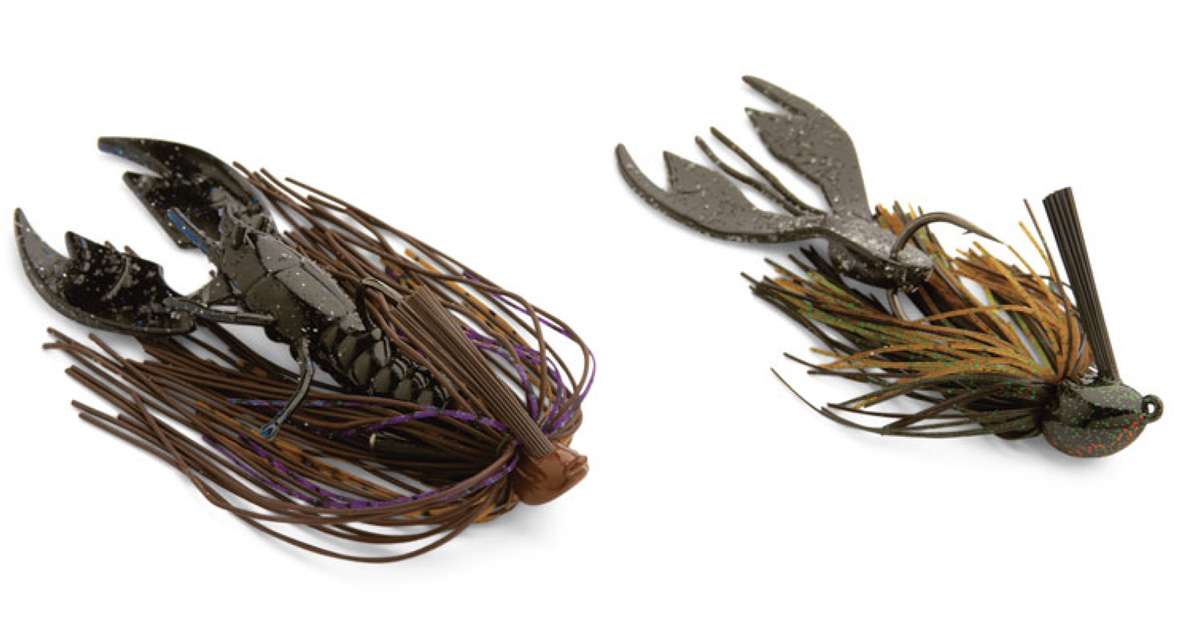
Rigging a jig for winter fishing isn’t complicated, but there are a few elements that matter more when the water is cold. Start with the jig head itself. Football heads are great for dragging across offshore structure, while Arkie-style heads work well in wood and grass. In winter, many anglers downsize trailers but keep the jig itself bulky. The trick is to maintain a big bait profile while reducing unnecessary action, because cold-water bass don’t want something that looks too lively. A chunk-style trailer made of dense soft plastic or even an old-school pork rind will thicken up the silhouette without kicking wildly on every twitch.
One thing winter jig fishermen in Texas and Louisiana often agree on is trimming the weed guard and the skirt. In cold water, subtlety wins. A trimmed weed guard helps you get better hookups when a sluggish bass mouths the bait rather than hammering it. Skirt trimming, especially on the bottom side of the skirt, keeps the jig from puffing out too much and lets it fall more naturally, more like a crawdad easing itself across the lake floor. Some anglers prefer dark colors like black and blue for stained winter water, while others swear by natural browns and greens, especially on sunny days when the water has cleared. The good news is that winter bass aren’t usually color picky; they’re more interested in how and where the jig is presented.
Fishing a jig in very cold water is a lesson in patience. When you think you’re fishing it slow enough, slow down even more. Cold-water jig fishing isn’t a game of action but one of presence. The jig needs to spend most of its time staying in contact with the bottom, crawling and pausing, mimicking prey that barely has the energy to move. Cast your jig out, let it sink until your line goes slack, then gently tighten up until you feel the weight of it on the bottom. The goal is to work that jig along the structure with small, deliberate movements—a drag here, a hop there, and long, intentional pauses in between. Many winter bites come during those pauses, when the jig is sitting motionless like a crawfish trying to melt into the mud.
Pay special attention to areas that collect heat. In Texas and Louisiana, where most of my fishing takes place, even a few degrees difference in water temperature can make or break a winter trip. South-facing banks warm quicker, rocks retain heat, and shallow flats next to deep drop-offs can stimulate crawling crawfish and browsing baitfish. On sunny winter days, big bass will move up just enough to capitalize on that warmth. A jig dragged slowly across that transition zone can tempt a big female staging for the very earliest pre-spawn movements. On cloudy days or after a cold front pushes through, those fish often slide right back into the nearest deep water. This is where a jig fished on steep breaks, stair-step ledges, or vertical timber becomes deadly.
Winter strikes often feel strange. Instead of the violent thump you get in the spring or summer, cold-water jig bites may be nothing more than a mushy weight at the end of your line, or even a sense that your jig has gotten lighter rather than heavier. Sometimes the line just starts swimming sideways. The challenge is learning to trust those odd sensations. Bass in cold water rarely inhale a jig aggressively; they simply ease it into their mouths and sit still with it. When your jig feels wrong, set the hook. Big winter bass, especially in Texas and Louisiana where double-digit fish are always a possibility, have a habit of eating subtly and then surprising you with their size.
The gear you choose can also make a difference. A sensitive rod helps you detect those soft winter bites. Many anglers prefer a medium-heavy or heavy rod with a fairly fast tip, giving both sensitivity and enough backbone to drive the hook home. Fluorocarbon line is a favorite for its low stretch and invisibility, but braid with a fluorocarbon leader also has a strong following among anglers fishing thick cover or stained water. The key is maintaining contact with the jig at all times, because in winter, the bite often happens in the instant the jig settles to rest.
Fishing a jig in winter doesn’t have to be complicated. In fact, its simplicity is part of its beauty. It’s a presentation that rewards those anglers who are willing to slow down, focus, and trust the process. Across the lakes and bayous of Texas and Louisiana, and the stump fields of Rayburn to the winding marsh channels of coastal Louisiana, the instinctive, old-school feel of dragging a jig along the bottom connects the fisherman to the fish in a way few other techniques do. It’s tactile. It’s methodical. It’s deeply satisfying.
Winter jig fishing also has a way of producing the biggest fish of the season. Cold water concentrates bass and slows down competition. When a big female decides to feed, she often does so with purpose, and she prefers a big, slow-moving meal that doesn’t require much effort. That’s why so many tournament anglers and weekend warriors alike rely on jigs during the coldest months. When you commit to fishing a jig, you’re not just fishing for any bass—you’re fishing for the bass.
Winter bass fishing with big jigs is less about sheer quantity and more about connecting with the rhythms of the fish. It’s about understanding how cold water changes their behavior, how subtle adjustments in presentation can make all the difference, and how the right combination of patience and confidence can lead to the fish of a lifetime. The quiet coves and chilly points of Texas and Louisiana waters hold giants this time of year, and a well-presented jig is one of the most reliable ways to coax them into biting.
So when the wind turns crisp and the mornings start with frost on your boat seats, don’t hang up your rods. Tie on a stout, dependable jig, trim the skirt just right, thread on a trailer that looks like a crawfish that’s had a long, rough night, and head for those deep winter hang outs. Slow your retrieve. Then slow it again. The successful fishermen are those who understand that less is often more. And when your line finally jumps, or moves sideways, or simply feels strange enough to make you wonder, set the hook with authority. Because out there in those frigid waters, when the winter bite comes on a big jig, it’s often from a bass worth every chilly hour you spent chasing her. Tight lines my friends and good luck.