
by Royce Jordan
The whitetail rut, or breeding times, starts firing up in late October and runs past the first of the new year, with November being especially interesting as bucks really seem to let their “guards” down. The aroma of a “hot” doe (in estrous or “heat”) is enough to drive any love stricken buck plumb bonkers.
The Texas North zone opens in this time frame, and it can be quite a show. This is something you will never know, if you never go.
I set up an Ameristep outhouse blind next to an old corral that overlooked a small opening in a corner portion of the property I was hunting on. The area was surrounded by a barbwire fence on two sides, and was approximately 75 steps from my set up. Deer tracks entered into the opening crossing under and over the fences. The tracks and “leavins” were everywhere.
That morning, I was entertained by small bucks chasing after does, crossing over and under the barbwire with no kind of effort whatsoever. They were doing what God and nature set them out to do, which was just another wonderful moment in my timeline.
The little moments aren’t so little, I’m here to tell you.
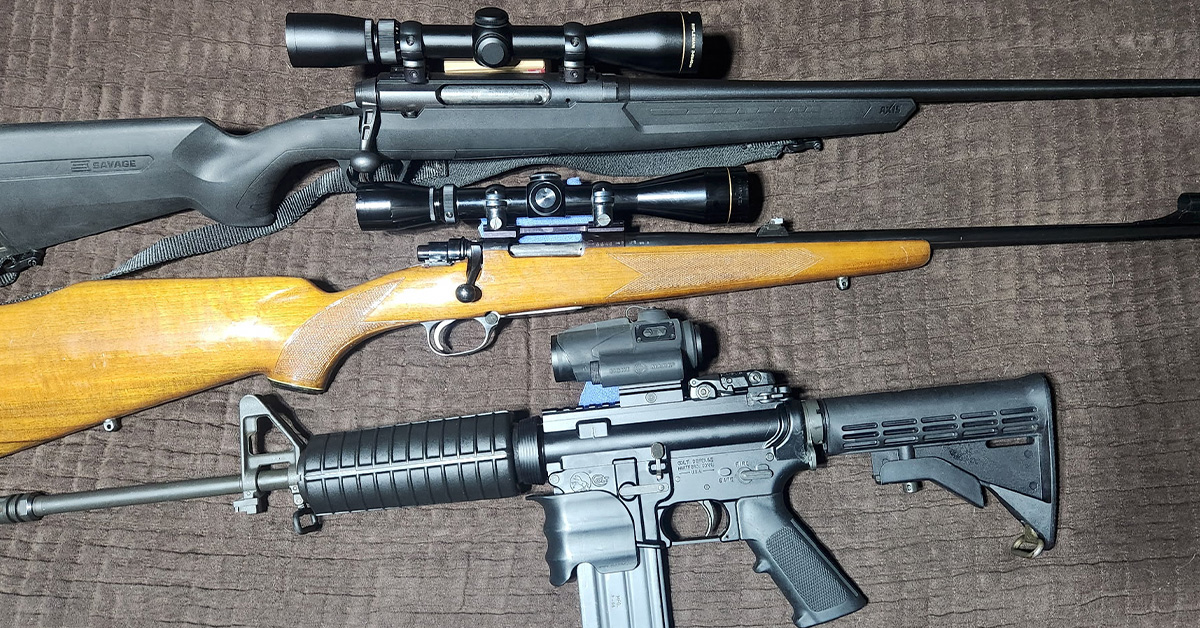
The evening hunt was just as impressive. Although, as I sat in the blind swatting at mosquitos and wasps (You ever see a full-grown feller clear a blind like an Olympic sprinter? Let a red wasp trespass on him), I was able to relax a bit to study my shooting iron. Several years back I come across a neat little rifle, a Savage Axis with a synthetic stock, chambered in .223 Remington. This little rifle was a deadly accurate example of fine engineering, and the 64-grain Winchester power point bullets the gun preferred never failed to harvest if I did my part, which is up to, and including this moment batting 1000%.
There were 3 deer feeding in the field in front of me and almost simultaneously they lifted their heads to gaze north of my location. I peered over my left shoulder, and saw a magnificent buck slowly strolling down the fence towards the deer in the field. He was definitely legal, with his antler main beams extending well past both ears.
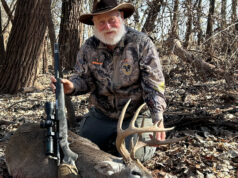
I raised my little Axis rifle into position, and when the buck paused to inspect his surroundings, about 125 steps out, I found him in my scope. I let that .223 pill fly right where I aimed, and he dropped right where he stood. The buck was dispatched as efficient as I could make it, and he was a fine example of a 175-pound 9 point with a 17 inch inside spread.
Bullet placement makes a big difference for sure, but that little .223 round performed just like its big brothers.
This is probably the point here…
Back in the early 80’s, thru the 90’s and into the early 2000’s, I was just as enamored by the bigger, faster, and usually Magnum rifle calibers to hunt our Texas whitetail deer as everyone else seemed to be. I needed my classics: the 25s, 270’s, 308 and 30/06’s, the 7MM and .300 Magnums. All natural born deer slayers, unless you put a “bad lick” on the target. Then the tedious, and often frustrating, trailing and tracking begins, with the end game hopefully locating the wounded game animal.
I acquired my first .223 in the early 80’s, a Ruger Mini-14. This rifle is a semi-auto, magazine loaded powerhouse that handled the military 5.56 Nato round as well as the .223 Remington cartridges. This particular rifle was used to dispatch coyotes while working in the Sand Flat area, and was my first rifle to kill a young 6-point buck before the antler restriction clause came into effect in Smith County.
While on the subject of the 5.56 Nato, many firearms chambered for the .223 Remington cartridge are not recommended to chamber a 5.56 Nato round, even though they appear identical. There are differences in dimensions, with the 5.56 Nato being larger. Chambers for the 5.56 can chamber and shoot ,223, but not recommended the other way around.
Now back to rifles. A gunsmith buddy of mine, Mike Seeley, always took the time to see how he could take existing gun inventory of the time and tweak the guns to better performance. He enjoyed taking bolt action rifles and glass bedding the outfit to secure a much more stable and accurate platform. He did this process on an Interarms Mini Mark X, which was chambered for the .223 Reminton cartridge.
This little rifle fit me like a glove. The firearms legend, Colonel Townsend Whelen, was quoted saying “only accurate rifles are interesting.” He would have loved this little peach! The rifle was used on several varmints, turkeys and deer. In fact, my experience in using the 64 grain spitzer soft-point bullets developed using this rifle. The typical 55 grain bullets that were much more available in retail stores seemed to impact game a bit more explosive and not penetrate as well. The 64 grainers, especially the Winchester power point bullet design, met all my needs for the deer sized game at what I call reasonable range.
Back in 2005, began my respect for the AR platform. An idiot opened fire at our courthouse in Smith County. Our law enforcement agencies began the process of switching and training using patrol rifles to keep up with these malefactor types. I opted for the classic Colt AR-15 with the 5.56 Nato chamber, which readily fired the .223 Remington cartridge. I topped this platform with a C-More red dot sighting system, and it is an incredible outfit. Aside from work function, this system has several varmints and one deer to its operation credit. However, being a Military and Law Enforcement platform, the weight does get noticeable. I located a Colt AR-15 model that had a thinner “pencil barrel” installed that really took the weight off. These AR-15 systems are amazing for hunting experience. Stumble into a large sounder of feral “Snorky” pigs and you can seriously eliminate a property damaging problem.
I’ve heard many times from different sources declaring the .223 cartridge is not adequate enough for deer size game. Let’s be reasonable. Using a .223, like my preference 62 plus grains, my choice being 64 grains, hits with impact energy over 1000 foot/pounds of energy at 100 yards. That will kill a deer, DRT (dead right there). Is the round adequate enough for everybody? Nope…
Rifle shooters need to know what their limitations are, and believe me, some folks sure seem to know a whole lot about something they have neither practiced for or have never done before. A rifle and caliber combination is a weapons/hunting system, or tools of the trade. Each has it’s pros and cons for the chore at hand. A multi-use caliber like the .223 Remington is a jack of all trades round instead of a master of any. Hunting deer sized animals with the .223 requires a specific examination of bullet types to penetrate and cause sufficient damage to take the animal’s lights out. Heavier and controlled expansion is a must, not light and explosive. Do not use varmint designed bullets on deer sized animals!
The rifle needs to be equipped with a sighting system that helps to pinpoint the rifle’s accuracy potential. This is assured with a good quality scope or “dot” sight. Shoot several rounds with your chosen system until your confidence is secured.
Just as important as your weapons system selection, use good judgement on what range you will be shooting. I personally will only use my .223 rifles for deer sized game under 150 steps (yards). If the range is farther, I step up to my beloved 30/30 Winchester, or something even more efficient. A shot out to 150 steps with a rifle round like the .223 Remington has such light recoil, you may be able to detect your bullet impact and target reaction immediately thru your lens. A good shooting form and trigger pull comes with practice; and familiarity with your rifle is foremost in harvesting the magnificent whitetail deer. Hunt with whatever you like, but don’t count out the .223 until you try it.